

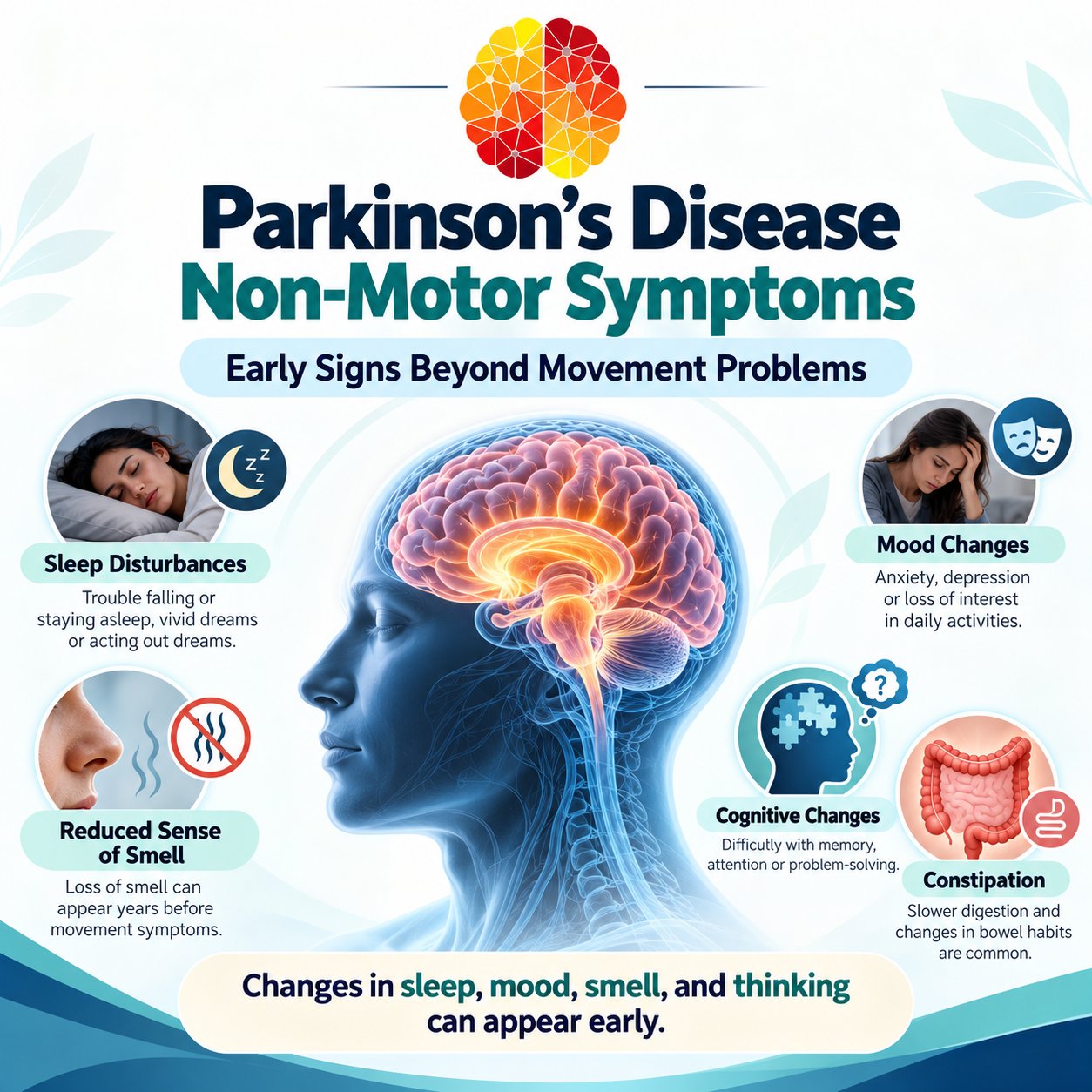
Parkinson’s Disease Non-Motor Symptoms: Early Signs Beyond Movement Problems
Parkinson’s disease is often linked to tremors, stiffness and trouble walking.. It’s not just about movement. The disease can also affect sleep, digestion, mood, memory and many other body functions. These are called Parkinson’s Disease Non-Motor Symptoms. Sometimes they show up before the movement problems start.
Knowing about these symptoms matters. They can mess with life, emotions and how you feel overall. Some people notice constipation, poor sleep or a weaker sense of smell. Others might feel anxious, have trouble with bladder control or find it hard to focus.
Spotting these changes early can help you and your family talk to a doctor. It’s important to remember these symptoms can happen in Parkinson’s. They might also come from other causes. So they don’t always mean you have the disease.
At BrainSpineMind Clinic Jaipur Dr. Vaibhav Mathur treats issues and movement disorders. If you’re searching for the Best Parkinson Specialist in Jaipur, learning about the range of Parkinson’s disease symptoms can help you know when to get checked by a professional and talk about the right care plan, with a skilled expert.
What Is Parkinson’s Disease?
Parkinson’s disease is a worsening brain condition that attacks the nervous system, especially the parts of the brain that steer movement. Parkinson’s disease is linked to the loss or failure of dopamine-producing cells in a region of the brain known as the substantia nigra.
Dopamine is a chemical that sends signals to help movements stay smooth and steady. When dopamine levels drop Parkinson’s disease symptoms like tremors, stiff muscles, slower motion and trouble keeping balance can appear.
Dopamine and other brain routes also control many other functions. Parkinson’s disease can disturb the systems that manage sleep, digestion, mood, focus and automatic body actions. These extra effects explain why Parkinson’s disease symptoms reach beyond what is visible on the body.
The way Parkinson’s disease shows up and how severe it becomes is different for each person. Not every person has the mix of Parkinson’s disease symptoms and how they change over time can vary.
If you are looking for the Best Parkinson Specialist in Jaipur, see an experienced neurologist like Dr. Vaibhav Mathur, at BrainSpineMind Clinic Jaipur can help you grasp your Parkinson’s disease symptoms and find the evaluation and treatment choices.
What Are Parkinson’s Disease Non-Motor Symptoms?
Non-motor symptoms are changes in body or mind that do not involve movement. These non‑motor symptoms may appear at stages of Parkinson’s disease. Many people overlook these non‑motor symptoms because they look like health problems.
The following are important non-motor symptoms to understand.
1. Sleep Disturbances
Sleep problems are a concern for some people living with Parkinson’s disease. They might have trouble falling asleep, wake up during the night or feel very sleepy during the day.
Some people act out their dreams while they sleep. Moving, talking, shouting or doing strange things. This can be linked to a condition called REM sleep behaviour disorder. Other causes may also be possible.
Not getting rest can make you feel tired during the day, have trouble focusing and have less energy overall. If sleep issues keep happening and start to affect your life or put you at risk of hurting yourself it’s important to talk to a healthcare professional.
2. Constipation and Digestive Problems
Constipation is another recognised non-motor symptom of Parkinson’s disease. A person may experience fewer bowel movements, hard stools, straining, or a feeling that the bowel has not emptied completely.
These problems can be related to changes in the autonomic nervous system and the way the digestive tract functions. Reduced physical activity, inadequate fluid intake, dietary factors, and certain medicines can also contribute.
Maintaining regular physical activity, eating fibre-rich foods, and drinking sufficient fluids when medically appropriate may help support bowel health. Persistent or severe constipation requires medical assessment, especially if accompanied by significant abdominal pain, vomiting, or blood in the stool.
3. Urinary Difficulties
People with Parkinson’s disease sometimes suffer from symptoms. These urinary symptoms can mean that they need to urinate, feel an urgent need to go or wake up many times at night to go to the bathroom.
Urinary symptoms may show up when the nervous system interferes with bladder control.. Urinary problems can also come from urinary tract infections, prostate enlargement, diabetes, medication side effects or other health conditions.
A medical evaluation can help find the cause and point to the right treatment. Patients should not automatically think that every urinary symptom is caused by Parkinson’s disease.
4. Loss or Reduction of Smell
A reduced sense of smell, known as hyposmia, can occur in Parkinson’s disease and may appear before noticeable movement symptoms.
People may find that familiar foods have less aroma or that they cannot recognise certain smells as easily as before. However, loss of smell can also be caused by nasal conditions, respiratory infections, and other neurological or medical problems.
Although this symptom may be worth mentioning during a neurological consultation, loss of smell alone cannot establish a diagnosis of Parkinson’s disease.
5. Anxiety, Depression, and Mood Changes
Parkinson’s disease can affect emotional well-being as well as physical health. Some individuals experience anxiety, low mood, reduced motivation, irritability, or loss of interest in activities they previously enjoyed.
These changes may be influenced by neurological changes, the stress of living with a long-term condition, sleep disruption, or other personal and medical factors.
Family members should take persistent mood changes seriously rather than dismissing them as a normal part of aging. A healthcare professional can assess emotional symptoms and recommend appropriate support, which may include counselling, lifestyle adjustments, or medication when indicated.
6. Memory and Concentration Difficulties
Some people who have Parkinson’s disease notice changes in attention, planning, processing speed or memory. They might find it harder to organize tasks, follow conversations or switch between activities.
Cognitive changes are different for each person. Some people continue to have their thinking abilities for many years while others start to have more serious difficulties as time goes on.
Memory problems can also happen because of sleep depression, the effects of medication, vitamin deficiencies and other health conditions. A proper assessment can help figure out what is causing the problems and decide what kind of help is needed.
7. Fatigue and Reduced Energy
Fatigue can make everyday activities feel unusually demanding. A person may feel exhausted even after adequate rest or find that ordinary tasks require more effort than before.
Fatigue may be related to Parkinson’s disease itself, sleep problems, mood changes, reduced activity, or other medical conditions. It should not automatically be attributed to the neurological disorder.
Maintaining a manageable daily routine, balancing activity with rest, and discussing persistent tiredness with a doctor can help identify practical ways to improve daily functioning.
8. Blood Pressure Changes and Dizziness
The nervous system helps control things, like blood pressure, heart rate, digestion and the way the bladder works. For some people who have Parkinson’s disease these things may not work well as they should.
One issue that can happen is called hypotension. This is when blood pressure goes down after a person stands up. Signs can be feeling dizzy, feeling lightheaded, feeling weak or having vision. In some cases the person might pass out.
Anyone who is often feeling dizzy should see a doctor. Taking time to stand up slowly might help with the symptoms. It is important to find out what is causing the problem especially if medicines or other health issues are part of the situation. If someone passes out, has chest pain or has strong symptoms they need to get help right away.
Can Non-Motor Symptoms Appear Before Tremors?
Yes. Some non-motor symptoms can appear years before the typical movement-related signs of Parkinson’s disease. Examples include a reduced sense of smell, constipation, and certain sleep disturbances.
However, these symptoms are common in people who do not have Parkinson’s disease. Their presence does not mean that someone will necessarily develop the condition.
The most useful approach is to consider the complete medical history, the combination of symptoms, their progression, and findings from a clinical examination. Early evaluation can help identify possible causes and ensure that appropriate care is provided.
When Should You Consult a Neurologist?
Consider consulting a neurologist when symptoms are persistent, unexplained, worsening, or interfering with everyday life. Medical evaluation is particularly important when non-motor symptoms occur alongside tremors, stiffness, slowness of movement, or changes in walking and balance.
During a consultation, the neurologist may ask about:
- When the symptoms started and how they have changed.
- Sleep patterns, digestion, urinary function, and emotional well-being.
- Current medicines and other medical conditions.
- Changes in movement, balance, coordination, and daily activities.
- Relevant family and medical history
Parkinson’s disease is primarily diagnosed through medical history and neurological examination. Additional tests may be recommended when necessary to investigate other causes or clarify an uncertain diagnosis.
Recognising symptoms early can help patients receive appropriate assessment and develop a management plan suited to their needs.
Managing Parkinson’s Disease Non-Motor Symptoms
There is no single management plan that works for everyone. Treatment depends on the symptoms, their severity, the person’s overall health, and any medicines they already take.
Follow an Individualised Treatment Plan
A neurologist may recommend medication adjustments, targeted treatment for specific symptoms, or referrals to other healthcare professionals. Patients should not stop or change prescribed medicines without medical advice.
Maintain Healthy Sleep Habits
A consistent sleep schedule, a comfortable sleeping environment, and limiting caffeine late in the day may support better sleep. Unusual movements during sleep should be discussed with a doctor, particularly if they cause injuries or disturb a partner.
Support Digestive Health
Regular physical activity, suitable dietary fibre, and adequate hydration may help manage constipation. People with dietary restrictions or other medical conditions should discuss appropriate changes with their healthcare professional.
Stay Physically Active
Exercise suited to an individual's abilities can support mobility, general fitness, mood, and daily functioning. A physiotherapist or healthcare professional can help develop a safe routine.
Pay Attention to Mental Health
Emotional support, counselling, social interaction, and appropriate medical treatment can help people cope with anxiety or depression. Families can also play an important role by listening without judgement and encouraging patients to discuss their concerns.
Attend Regular Follow-Up Appointments
Symptoms and treatment needs may change over time. Regular reviews allow the healthcare team to monitor progress, assess treatment effects, and address new concerns.
Parkinson’s Disease Treatment in Jaipur: Neurological Care at BrainSpineMind Clinic
People looking for Parkinson’s Disease Treatment in Jaipur might find it helpful to speak with a neurologist who has experience with movement disorders. Knowing about both the movement-related symptoms and the other symptoms that can happen is a part of looking at the condition and making a plan for care over time.
Dr. Vaibhav Mathur at BrainSpineMind Clinic Jaipur offers advice and care for people with movement disorders. Patients can talk about symptoms like shaking, trouble sleeping, constipation, changes in mood and other issues that can affect life.
If you are looking for the Best Neurologist in Jaipur, seeing a trained expert can help you understand what is happening with your symptoms and look into the treatment choices. A Parkinson’s Disease Specialist in Jaipur can check your symptoms, look at your history and suggest more testing or ways to manage your condition when needed. A Movement Disorder Specialist in Jaipur can also help look at changes in movement and any other problems that can happen alongside them.
The best way to handle this depends on what each person needs. A care plan that is made for the patient, regular check-ins and good communication between patients, their families and the doctors can help with managing symptoms better and improving the quality of life.
Conclusion
Understanding Parkinson’s Disease Non-Motor Symptoms is important because the condition can affect sleep, digestion, mood, memory, and automatic body functions in addition to movement. Some symptoms may develop before tremors or stiffness, but they can also occur for many other reasons.
Paying attention to persistent changes and discussing them with a healthcare professional can help identify their possible causes and guide appropriate care. An individualised treatment plan, healthy daily habits, emotional support, and regular follow-up may help people manage symptoms and maintain their quality of life.
Frequently Asked Questions (FAQs)
1. What are the common non-motor symptoms of Parkinson’s disease?
Common non-motor symptoms include sleep disturbances, constipation, reduced sense of smell, urinary difficulties, anxiety, depression, fatigue, and changes in memory or concentration. Not everyone experiences all these symptoms.
2. Can Parkinson’s disease start without tremors?
Yes. Some people develop symptoms such as constipation, reduced smell, or sleep disturbances before noticeable movement problems. However, these symptoms alone do not confirm Parkinson’s disease.
3. Are non-motor symptoms always present in Parkinson’s disease?
No. Symptoms vary from person to person and may develop at different stages. Some people experience several non-motor symptoms, while others experience fewer.
4. Can Parkinson’s disease cause sleep problems?
Yes. Parkinson’s disease may be associated with difficulty sleeping, daytime sleepiness, and unusual movements during sleep. Other medical conditions and medications can also cause sleep problems, so assessment may be helpful.
5. When should I seek medical advice for possible Parkinson’s symptoms?
Seek medical advice when symptoms persist, worsen, or interfere with daily life, particularly if they occur alongside tremors, stiffness, slowness, or walking difficulties. Sudden neurological symptoms require urgent medical evaluation.
6. Where can I consult a Parkinson’s disease specialist in Jaipur?
You can contact BrainSpineMind Clinic Jaipur to enquire about neurological consultation with Dr. Vaibhav Mathur and assessment of movement disorders. The appropriate evaluation and care plan will depend on your symptoms and medical history.
RECENT POSTS
-
Parkinson’s Disease Non-Motor Symptoms: Early Signs Beyond Movement Problems
-
 How Deep Brain Stimulation (DBS) Can Help Treat Dystonia A Neurologist’s Guide
-
 Best Movement Disorder Treatment in Jaipur Expert Care, Diagnosis & Treatment Options
-
 Choosing the Right Best Neurologist for Parkinson Disease What Patients Should Consider
-
 What Patients Should Know Before Choosing the Best Parkinson Doctor in Jaipur
-
 Now There is a Pacemaker in the Bladder, Which Controls Urine Flow.
-
 Searching for a Neurologist in Jaipur? Here’s Your Detailed Overview
-
 Passionate about Brain Care However, See the Top Neurology Doctor in Jaipur
-
 Advanced Treatment for Parkinson Disease in Jaipur